
Napa Landscape Design Involves More Than Choosing a Few Plants, Trees, and Flowers
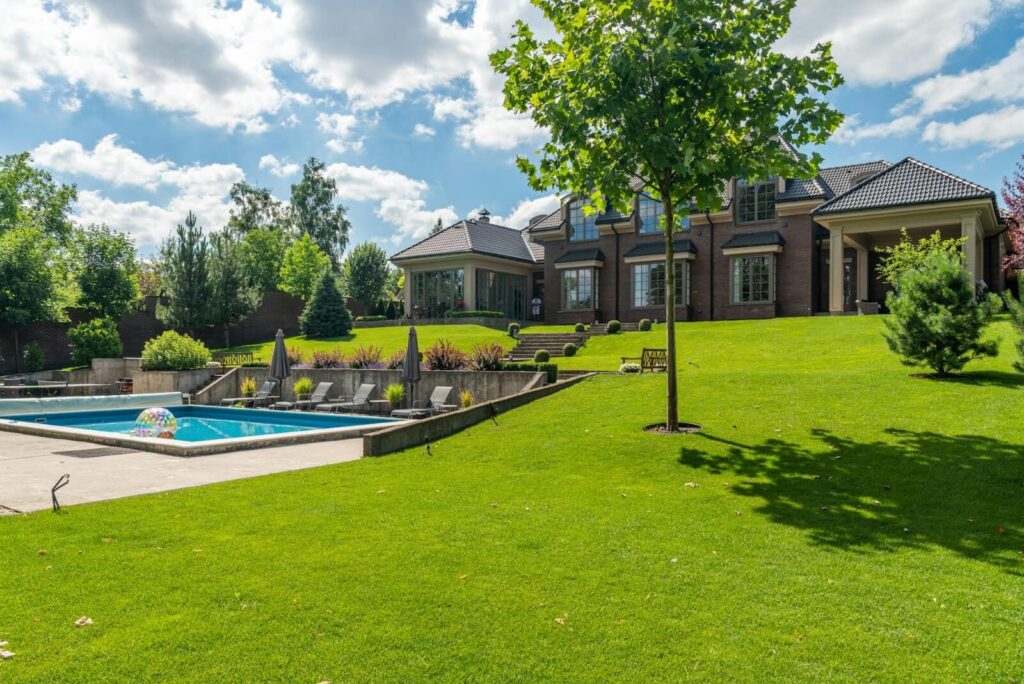
People might assume Napa landscape design involves nothing more than deciding where to put trees, plants, and shrubs in a landscape. It requires more than this. Many elements must be considered when designing a landscape for a breathtaking space.
Lines
Lines may be used to create boundaries or establish patterns within a landscape. Directional lines are often used as a way to increase the formality of the landscape or give it a relaxed feel. Straight lines direct a person’s eye to specific aspects of the landscape, while curved lines are more comfortable and encourage people to explore the landscape at their own pace. Vertical lines draw the eyes upward, while horizontal lines make the landscape look bigger than it truly is.
Shapes
Every landscape has different forms and shapes, which help establish the style and atmosphere. As with lines, the forms and shapes influence whether the landscape is formal or relaxed. Shape refers to two-dimensional qualities, while form refers to three-dimensional elements. Both should be considered when planning a landscape.
Mass
Every item adds mass to a landscape through its visual size. Landscape planners work to achieve balance by combining different masses and leaving open spaces. The right balance will unify the landscape.
Color
Every landscape needs color to add depth and visual appeal. Flowering plants may add color, or a person might offset the green of foliage with colourful hardscape items. Choose complementary or contrasting colors and pick shades that will either excite the viewer or calm them. Color may also be used to guide a person’s eye to a focal point in the landscape or create visual flow.
Texture
Nature is filled with different textures, and these textures should appear in a landscape. Combining various textures allows a landscape planner to achieve specific effects. Coarse textures add visual interest and depth to the landscape; fine textures soften rough edges. Hardscape materials also add texture and can be used for contrast or repetition.
Proportion and Scale
Landscape planners must find the right balance between various elements for a harmonious look. To achieve this balance, they need to ensure items are appropriately sized in relation to nearby objects. Proportion refers to the size of various objects as they relate to surrounding landscape elements. Scale, in contrast, refers to the size of these items and their relationship to a fixed object in the landscape. When the planner finds the right blend of balance, proportion, and scale, the landscape will be peaceful and welcoming.
Focal Point
A focal point in a landscape allows it to shine. It provides the space with personality. Many people assume the focal point must be at the center of the landscape, but it might be hidden away. People will be charmed when they come across this item and want to see more.
Repetition and Contrast
Repeating elements and materials in a landscape adds visual interest. However, the landscape also needs contrasting elements to avoid monotony. The goal is to have repetitive elements with some contrasting features to ensure a pleasing arrangement that doesn’t feel overwhelming.
When these elements are properly combined, a person will have a landscape that generates an emotional reaction. People will view the landscape as a work of art and want something similar for their property. The landscape will be stunning and memorable because it is so unique.